Serving Florida & Texas Since 1987


Why Pool Service In Texas Is Different Than Florida (And What It Means for You)
Key Takeaways
- Texas heat, UV index, dust, and storm patterns create pool care challenges vastly different from Florida’s humid coastal climate
- Patriot Pool & Spa builds service plans around Austin, and Dallas–Fort Worth, weather—not generic “Sun Belt” rules
- Texas pools typically need stronger circulation, more frequent chemical balancing in summer, and proactive equipment protection from extreme heat and hard freezes
- Texas pool service providers offer complete solutions, including maintenance, cleaning, repairs, and renovations, for all your pool needs
- Combining homeowner attention with professional pool service helps maintain the most reliable pool care in a demanding Texas environment
- Season-by-season adjustments and ongoing maintenance protect your investment and keep your backyard ready for relaxation year-round
- Proactive maintenance helps prevent future issues and extends the lifespan of your pool
Texas vs. Florida: How Weather Changes Pool Care
If you’ve moved from Florida or read pool advice written for coastal markets, your Texas swimming pool needs a reset. Central and North Texas experience wider temperature swings, drier air, and harder water than Florida’s persistent humidity and daily summer rains.
Quick comparison:
- Evaporation rate: Texas loses 0.25–0.5 inches daily vs. Florida’s 0.1–0.2 inches
- UV exposure: Texas UV index regularly exceeds 10 from June–September
- Dust/pollen load: Cedar and oak debris clog filters 20–30% faster in Texas
- Rain frequency: Florida sees 2–3x more summer rain
- Freeze risk: 70% of Texas pools north of I-10 face annual freeze threats; Florida rarely dips below 40°F
Florida rules for chlorine, run times, and maintenance frequency simply cannot be copy-pasted onto a Texas pool.

How Texas Heat and Sun Hammer Your Pool
Austin recorded 20+ consecutive days above 100°F in 2023. That kind of heat accelerates algae growth, burns off unstabilized chlorine, and concentrates calcium and stabilizer through rapid evaporation. Your pool cleaning routine must adapt.
High UV degrades free chlorine at 2–3 ppm daily in Texas versus roughly 1 ppm in Florida. Without proper CYA stabilization (40–60 ppm), you’re fighting a losing battle. Maintaining the entire pool system—including pumps, filters, and automation—is crucial for optimal performance in the Texas heat. Patriot Pool & Spa recommends maintaining chlorine at 3–5 ppm during peak summer and scheduling partial drain-and-refill cycles every 2–3 months to reset water quality.
With professional pool service Texas homeowners can relax and rely on experts to keep their pool system safe, efficient, and enjoyable all summer.
Circulation and Filtration Demands in a Texas Summer
Many Florida guides suggest 6–8 hour pump run times. In Texas, that’s insufficient. During July–August heat waves, variable-speed pumps should run 12–24 hours daily to achieve proper turnover and prevent stagnation.
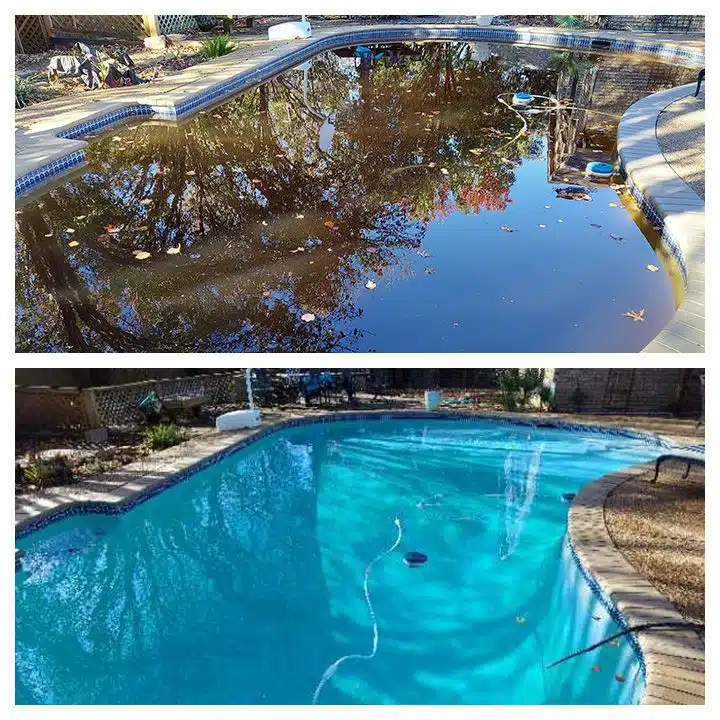
Warm water above 86°F doubles algae growth rates. Extended filtration plus consistent brushing prevents green pools. Our technicians track filter pressures visit-to-visit, scheduling backwashes proactively when Texas dust and construction debris load filters faster than expected. As part of our pool service Texas offerings, we also follow a detailed process for seasonal pool opening and closing, ensuring your pool is properly prepared for spring and protected during winter.
Dust, Pollen, and Storms: Texas Debris Loads vs. Florida Rains
Cedar pollen blankets Hill Country pools in winter (counts reaching 2,000 grains/m³), while oak tassels overwhelm skimmers each spring. Unlike Florida’s frequent rinsing rains, Texas alternates long dry spells with sudden thunderstorms that dump debris and dilute chlorine simultaneously.
Post-storm recovery involves immediate debris removal, shocking to restore chlorine levels, and equipment checks for hail damage. Patriot routes technicians seasonally to hit problem neighborhoods right after known storm fronts. Scheduling service for storm recovery is quick and convenient—simply call or contact us online to set your appointment. Move forward after severe weather by reaching out promptly for reliable pool service Texas homeowners trust.
Texas Storm Readiness and Recovery Tips
Pre-storm: Lower water a few inches if heavy rain is forecast, secure furniture, and set automation to run circulation during and after storms.
Post-storm: Empty baskets quickly, shock if diluted, inspect pumps and heaters for visible damage. Schedule a professional visit after hail or lightning to catch hidden equipment problems early.
Freeze Events in Texas: Different From Florida, and Getting More Extreme
February 2021’s Winter Storm Uri dropped temperatures to single digits for days, causing over $500 million in pool repairs across Texas. Sub-freezing snaps in 2022 and 2024 reinforced that freeze protection isn’t optional here.
Unlike Florida’s mild winters, Texas pools swing from 100°F summers to hard freezes, stressing plumbing, filters, and automation systems. Cracked PVC and burst equipment remain common when power outages stop freeze-protection circulation.
Patriot Pool & Spa’s Texas Freeze-Protection Checklist
- Below 32°F: Ensure pumps run continuously with valves open for full circulation
- Power outages: Safely drain pumps, filters, and heaters following manufacturer specs
- Each November: Schedule Patriot’s pre-winter inspection to verify automation settings and valve positions
- Post-freeze: Request pressure testing to catch slow leaks before they damage decking

Water Chemistry in Texas: Hard Water, Scale, and Sun
Central Texas municipal water averages 300–500 ppm calcium hardness—double Florida’s softer coastal supplies. Combined with high evaporation, this concentrates minerals and raises LSI, increasing scale risk on tile, heaters, and salt cells.
Patriot performs regular LSI checks, tracks calcium and CYA across seasons, and recommends partial drains or softened refill water where appropriate. This protects plaster longevity and swimmer comfort better than generic pool-store targets.
Texas-Specific Chemical Targets and Adjustments
Our experienced team follows Texas-optimized ranges:
- Higher chlorine (4–6 ppm) during high-UV months
- CYA maintained at 40–60 ppm to prevent overstabilization
- pH 7.4–7.6 and alkalinity 80–120 ppm to manage scale and etching
- Saltwater pools receive attentive calcium monitoring, especially for cells and heaters
Patriot logs readings visit-by-visit, adjusting dosing as Texas temperatures shift from March through August.
How Patriot Pool & Spa Designs Service Plans for Texas Pools
We’re a company committed to Texas-specific pool care. Our technicians train on long heat waves, cedar pollen, city water chemistry variations, and freeze protocols—not franchise playbooks from Florida.
Clients can expect complete pool service, including maintenance, cleaning, and repairs. We focus on building long-term relationships with our clients by providing personalized service tailored to each client’s needs.
Whether you’re in Austin, DFW, Keller, Royse City or surrounding areas, we adjust visit frequency, filter service, and chemical buffers for each neighborhood’s reality. We serve surrounding communities with route planning tuned to local debris patterns and seasonal demands.
Weekly Texas Pool Service: What Patriot Typically Includes
- Skimming and debris removal matched to local pollen and dust
- Brushing walls, tile line, and steps
- Basket emptying and routine inspections of equipment
- Chemical balancing with Texas-adjusted targets
- Filter monitoring with scheduled cleaning based on actual pressure readings
Technicians leave visit notes so customers can see how that week’s weather affected their pool.
Seasonal Adjustments: Spring, Summer, Fall, and Winter in Texas
- Spring: Pollen cleanup, algae preemption, equipment checks before extended runs
- Summer: 12+ hour circulation, aggressive brushing, mid-season filter cleanings
- Fall: Leaf management, tapering run times, and chlorine as water cools
- Winter: Freeze-prep visits, minimal but consistent maintenance, post-freeze inspections
As part of our pool service Texas seasonal offerings, we follow a detailed process for opening and closing pools, which includes deep cleaning filters to ensure your pool is protected and maintained year-round.
Technician Training and Insurance: Why It Matters for Texas Pool Owners
When it comes to caring for your swimming pool in Texas, the expertise and reliability of your pool service provider make all the difference. At Patriot Pool and Spa, we know that Texas pools face unique challenges—from extreme heat and unpredictable weather to heavy debris and demanding water chemistry. That’s why our experienced team is committed to ongoing technician training and comprehensive insurance coverage, ensuring every customer receives the highest standard of pool care and maintenance.
As a locally operated business serving Dallas, Austin, and surrounding communities, we take pride in our knowledgeable technicians. Each member of our team undergoes regular training to stay current on the latest pool equipment, pool cleaning techniques, and safety protocols. Whether you need routine inspections, debris removal, or complex pool repairs, you can trust that our technicians are certified and prepared to handle every aspect of pool maintenance with professionalism and skill.
Insurance is another key part of our commitment to reliable pool care. By choosing a company with fully insured technicians, you protect your investment and gain peace of mind knowing that your swimming pool is in safe hands. Our team is equipped to serve both residential and commercial pools, offering consistent, high-quality service tailored to your needs and budget.
DIY Tips for Texas Pool Owners (And When to Call Patriot)
Many families enjoy hands-on pool care. Weekly tasks you can manage include quick skims, visual equipment checks, basket emptying, and spot-testing water quality with a basic kit.
Professional pool services save homeowners an average of 5–6 hours per month in maintenance.
Test more frequently during June’s first heat wave, after major storms, and following heavy use. Call Patriot for persistent algae, unexplained water loss, noisy pumps, or repeated cloudy water. Combining your attention with our professional service creates the most reliable pool care for Texas life.
Regular pool maintenance ensures your pool is always ready for use, allowing families to enjoy more time together and create lasting memories.
FAQ
These questions address common Texas-specific concerns not fully covered above.
How much does pool service cost in TX?
Full-service pool providers in Texas typically cost between $120 and $300 per month, with weekly pool service prices starting at around $60 per week. The cost can vary based on factors such as pool size, type, and frequency of visits.
What should I look for in a pool service provider in Texas?
When choosing a pool service provider in TX, check for proper licensing through the Texas Department of Licensing & Regulation (TDLR), and ensure the company is insured to protect against property damage. Look for technicians with the Certified Pool Operator (CPO) credential from the industry organizations. Customer reviews, ratings, and service guarantees are important indicators of reliability and quality. Asking for recommendations from friends or family can also help you find a reputable provider.
How often should I schedule professional pool service in Texas?
- Most Central Texas pools perform best with weekly service from March through October
- June–August peak season benefits from weekly visits plus homeowner spot checks
- Lower-use pools may shift to bi-weekly visits in cooler months
- Contact Patriot for a consultation to match frequency to your specific pool size and location
Is maintaining a pool in Texas more expensive than in Florida?
- Texas pools often require longer pump runs and more chemical attention, increasing costs slightly
- Variable-speed pumps reduce energy use by 70–80% compared to single-speed models
- Proactive maintenance prevents costly repairs from algae blooms or equipment failures
- Over time, Texas-specific care protects your investment and controls your budget
Do I really need freeze protection for my Texas pool?
- Yes—most Texas markets face freeze risk annually, as proven by Winter Storm Uri
- A few nights in the low 20s can crack plumbing and damage filters without circulation
- Patriot checks automation freeze settings each fall during routine inspections
- If you lose power during a hard freeze, contact us immediately for emergency guidance
Recent News
How Texas Weather Affects Your Swimming Pool: Pool Maintenance Tips

What Does a Pool Service Company Do? Cleaning, Repairs, Maintenance

Essential Texas Pool Maintenance Tips: A Complete Breakdown

How to Troubleshoot Common Pool Problems: Essential Pool Maintenance